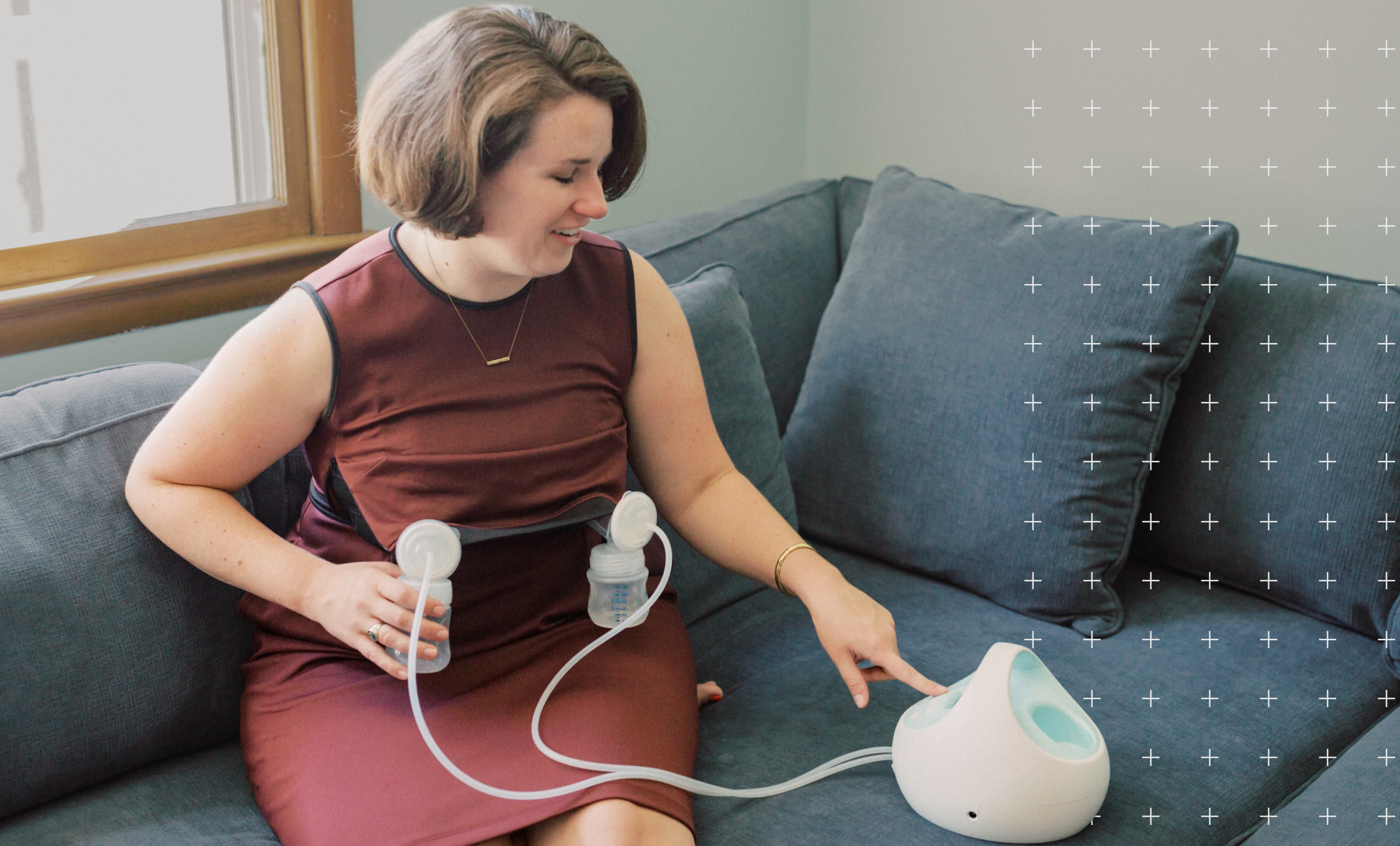
For U.S. employers, the rules around supporting employees who’re pumping at work have shifted in the past few years. The PUMP Act (short for Providing Urgent Maternal Protections for Nursing Mothers) went into effect in 2023, and expanded who's covered and what's required.
In this guide to breastfeeding at work laws, we’ll cover:
- Why support for nursing parents is important, and what lactation benefits are
- What the PUMP Act requires, and the only three exemptions that exist
- How some states go above and beyond what the law requires
- What good lactation support at work truly looks like
Key takeaways
- The PUMP Act requires most employers to provide reasonable break time and a private, non-bathroom space to pump, for up to a year after a child's birth.
- Only three narrow exemptions exist: an undue-hardship exemption for employers with fewer than 50 employees, an unconditional exemption for air carrier crewmembers, and a conditional exemption for certain rail and motorcoach employees that took effect December 29, 2025.
- Break time can be unpaid only if the employee is completely relieved of duty during it; if paid breaks are otherwise standard, pump breaks have to be paid too.
- Federal law sets a minimum standard, and states commonly go further in four ways: longer coverage windows, guaranteed pay, lower employer-size thresholds, or more detailed space and process requirements.
- Separately from workplace break-time law, most health insurance plans are required to cover lactation consultations and breast pump costs at no charge to the employee.
What are lactation benefits at work?
Lactation benefits are the time, space, and clinical support employers provide so employees can pump or breastfeed during the workday. That ranges from the legal minimum (break time and a private space) to a more complete benefit that adds on-demand access to lactation consultants and support for parents returning from leave. For most organizations, this sits inside a broader family-building benefit, alongside pregnancy, postpartum, and parenting support.
Why lactation support matters for employers
60% of mothers in the U.S. stop breastfeeding sooner than they intended to, and the CDC lists unsupportive workplace policies and limited parental leave among the reasons why. The drop-off shows up clearly in national data. Of babies born in 2022, 85.7% were breastfed at some point, but that share falls to 62.1% by six months and 40.8% by one year, a decline that tracks closely with when most parents return to work.
That timing is exactly why workplace policy carries so much weight. An employee who has reliable time, space, and support to keep pumping is more likely to continue on the schedule that works for her and her child.
What does the law require? The PUMP Act and other protections
The PUMP Act was signed into law on December 29, 2022, as part of the Consolidated Appropriations Act. It's an amendment to the Fair Labor Standards Act (FLSA), and it significantly expanded who counts as a covered employee. Coverage extends to salaried employees, healthcare workers, teachers, agricultural workers, remote workers, and other groups that weren't protected under the law's 2010 predecessor.
Under the PUMP Act, most employees, regardless of employer size, have the right to:
- Reasonable break time to express milk, each time they need it, for up to one year after their child's birth.
- A private space that is functional for pumping, shielded from view, free from intrusion, available whenever needed, and not a bathroom.
The only three exemptions
Paid or unpaid?
Pump breaks can be unpaid, but only if the employee is completely relieved of duty during that time. If an employer's standard practice is to pay for other short breaks, pump breaks have to be paid on the same terms.
What happens if an employer doesn't comply
Since April 28, 2023, employees have had access to the full range of FLSA remedies for PUMP Act violations, including reinstatement, back pay, and liquidated, compensatory, or punitive damages. Before that date, remedies were limited to recovering unpaid wages.
State laws can require more protection for breastfeeding at work
The PUMP Act sets the bare minimum, and the U.S. Department of Labor has confirmed that federal law doesn't preempt state law that raises the bar. The bottom line for multi-state employers: check state and local requirements before assuming the federal baseline is enough. The extra protections states have enacted fall into a few categories.
Longer coverage windows
Federal protection runs for one year after birth. Many states stretch well beyond that. For example, New York, Maine, and Vermont all protect the right to pump for three years. Other states like Colorado and Washington protect pumping at work for two years.
Pay that's guaranteed outright
Under the PUMP Act, break time only has to be paid if the employee is not fully relieved of duty. Some states remove that condition entirely. New York requires thirty minutes of paid break time per session. Puerto Rico goes even further, and guarantees a full paid hour each day.
A broader definition of which employers are covered
The PUMP Act's undue-hardship exemption is available to employers with fewer than 50 employees. Some states shrink that eligibility. New Jersey covers employers of any size, with no exemption available at all, while Oregon narrows the exemption to employers with fewer than 10.
More specific requirements for the space and the process
A few states go beyond "private and not a bathroom." California is the most prescriptive on the lactation room requirements. There must be a sink, a refrigerator or cooling device, and a written policy distributed to employees. New Mexico and Virginia take a different approach, and require employers to engage in a good-faith interactive process with the employee for lactation accommodations, similar to how ADA accommodations typically work.
What good lactation support at work looks like in practice
You can check every PUMP Act box and still leave an employee dreading their next pump break. Here’s how to both meet the legal requirements, and support pumping at work in a way your workforce will appreciate.
Key elements include:
- A real, dedicated space. Not a repurposed supply closet or a room that doubles as something else whenever someone else needs it.
- Flexible, unhurried break time. Scheduled around actual pumping needs, not squeezed into a standard fifteen-minute break.
- On-demand access to an IBCLC or lactation consultant. So supply, latch, or pain issues get addressed without a multi-week wait for an appointment.
- Manager training. So a request for space or time gets handled the same way regardless of who someone happens to report to.
- Support for travel, including milk shipping for employees traveling for work.
- Continuity after returning from leave. Support shouldn't end the day someone comes back. Legal protection runs a full year, and the practical need often runs longer. One Carrot member's experience navigating breastfeeding an older child while pregnant is a good illustration of what that kind of continuity looks like from the employee's side.
Common gaps to watch for:
- Treating a bathroom as a compliant space, even a clean or private one.
- No written policy, so guidance depends on whoever happens to be asked.
- Assuming the small-employer exemption applies automatically, instead of doing the individualized undue-hardship analysis the law actually requires.
- Support that ends once someone returns from leave, even though the legal right and the practical need both extend well beyond day one back.
How Carrot's pregnancy and postpartum program can help
Carrot's pregnancy and postpartum support includes lactation specialists among its Carrot Experts, giving members unlimited virtual access to lactation consultants alongside doulas, midwives, and OB/GYNs throughout pregnancy and after birth. That means HR doesn’t have to build the clinical piece of lactation support from scratch.
Frequently asked questions
What are breastfeeding rights at work?
Most employees have the right to reasonable break time and a private space, other than a bathroom, to express milk during the workday, for up to a year after their child's birth. This comes from the PUMP Act, which amended the FLSA and extended these protections to nearly all employees regardless of employer size or industry.
How much break time is an employer required to give for pumping?
The law doesn't set a specific number of minutes. It requires "reasonable" break time, each time an employee needs it, for as long as that individual actually needs to pump. That varies by person and by session, and it's intentionally not reduced to a fixed schedule. What matters legally is whether the break is frequent enough and long enough to meet the need, not whether it matches a standard company break policy.
Are lactation consultants covered by insurance?
For most people, yes. Under the Affordable Care Act's women's preventive services requirement, most health plans are required to cover lactation counseling and the cost of a breast pump with no copay or deductible, for as long as someone is breastfeeding. The specifics (which pump types qualify, whether pre-authorization is needed, in-network requirements) vary by plan, and Medicaid coverage varies by state since it's state-administered rather than federal. On top of whatever a given health plan covers, Carrot members also have on-demand access to lactation consultants as part of their benefit.
How to get pumping at work right
The PUMP Act set a clear legal minimum, but it’s just that: a minimum. Employers that treat it as the whole plan will technically comply and leave employees feeling unsupported. The ones that go further, with a real space, flexible time, clinical access, and support that doesn't disappear after week one back, will see more successful returns-to-work and more engaged employees.
If you're evaluating what lactation support should look like for your workforce, or auditing whether your current policy holds up against the PUMP Act's requirements, get in touch and we can help you figure out what's next.